
Long-term care pharmacies are heading into one of the most significant reimbursement shifts in years. With the first set of medications entering the Medicare Drug Price Negotiation Program on January 1, 2026, LTC pharmacies must prepare now for the operational, financial, and clinical ripple effects that come with the introduction of the Maximum Fair Price (MFP) reimbursement framework.
The Inflation Reduction Act (IRA) is reshaping how Medicare Part D pays for high-cost medications. While its intent is to lower out-of-pocket costs for beneficiaries, the downstream effect on LTC pharmacies could be severe if reimbursement strategies do not account for the specialized nature of LTC care.
For an industry that already operates on tight margins and high-acuity demands, MFP represents both a challenge and a call to act quickly.
What Is the Maximum Fair Price (MFP)?
As part of the IRA, Medicare now has the authority to negotiate the price of qualifying high-expenditure drugs. The outcome of those negotiations is the Maximum Fair Price—an amount that Part D plans must honor but that pharmacies must dispense at.
In practice, this creates a new dynamic:
-
Plans pay pharmacies the MFP or a plan-determined amount tied to it
-
Pharmacies still must deliver intensive LTC-specific services
-
Reimbursement may not reflect the cost of meeting those care requirements
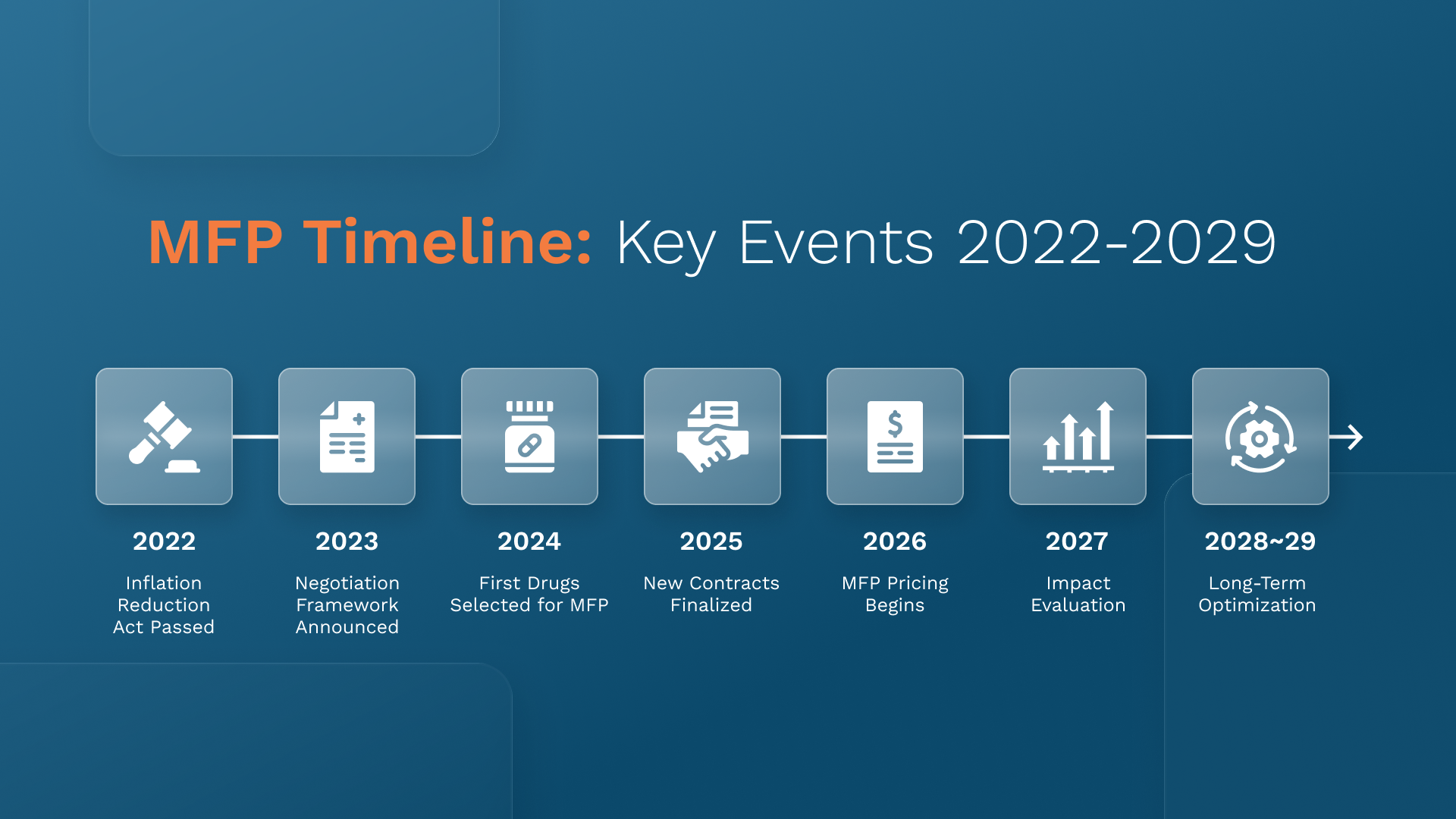
The first 10 negotiated drugs will enter the MFP system on January 1, 2026, with more added each year.
The Impact on LTC Pharmacies: A Perfect Storm
According to ASCP’s national survey of long-term care pharmacies, the findings are sobering:
- 91% anticipate staff layoffs
- 85% expect to reduce essential services
- 82% will be forced to shift costs to customers
- 60% may need to close locations
- Pharmacies expect a 27% decrease in revenue from the first 10 negotiated drugs alone
LTC pharmacies provide services that retail models do not: cycle fill, emergency deliveries, controlled substance management, regulatory documentation, consulting services, specialized packaging, and 24/7/365 responsiveness.
Those services don’t shrink simply because drug prices are changing.
Without thoughtful payer strategies and operational safeguards, the MFP era creates real risks for:
- Medication access
- Continuity of care
- Staff retention
- Cash flow stability
- Overall business sustainability
Understanding What’s Changing in 2026
Here’s how the IRA and MFP framework alter the reimbursement landscape for long-term care pharmacies:
1. Reduced Pharmacy Revenue for Negotiated Drugs
The MFP lowers the plan reimbursement tied to the drug ingredient cost, shrinking margins—and could even fall at or below the cost of dispensing in LTC settings.
2. Increased Financial Pressure on High-Utilization Facilities
Facilities with residents on high-cost, high-use therapies will feel the sharpest revenue impact. Larger pharmacies or those that work with larger Group Purchasing Organizations may see strengthened negotiating and buying power in reimbursement rates or pushing for accelerated MFP rebate payments.
3. Contracts Must Now Account for MFP
New payer agreements must explicitly incorporate clarity around:
- Reimbursement floors
- Professional dispensing fees
- Payment timing
- Fair allocation of risk
4. Potential Disruptions to Formulary Behavior
Plans may shift preferences toward negotiated drugs—even when alternatives might better suit clinical needs. A challenge with finding lower cost alternatives with the drugs currently impacted by round one of Maximum Fair Price ceilings is that several of these drugs are protected under patents and generics are not currently available for substitution in the United States until those patents expire.
ASCP Recommendations to Protect LTC Pharmacy Sustainability
To support continuity of care, ASCP’s CEO Chad Worz outlines several critical steps Plans and PBMs must adopt:
- Reimburse at no less than the negotiated MFP
- Pay an adequate and reasonable LTC professional dispensing fee
- Process claims as quickly as operationally possible (even though CMS allows 7 days)
- Avoid interfering in pharmacy-manufacturer relationships
These guidelines are essential for safeguarding patient access and supporting LTC pharmacies as the care engine for older adults.
The move toward Maximum Fair Price will redefine the financial and operational realities of long-term care pharmacy. While its intent supports beneficiaries, it places unprecedented pressure on pharmacies that provide essential, specialized care to older adults.
The good news: LTC pharmacies are not navigating this alone. FrameworkLTC has implemented new functionality to track, report on, and reconcile billing for Maximum Fair Price impacted claims. With built-in MFP reporting, your pharmacy can better predict short-term outstanding account receivables while also quantifying the historic volume and ensuing financial impact of MFP impacted claims.
Schedule a Demo to explore the difference of a pharmacy management provider that helps you stay ahead of regulatory shifts.
SoftWriters is delivering the tools pharmacies need to adapt, streamline, and sustain operations through the IRA changes—empowering them with:
- Real-time operational and reimbursement insights
- Integrated AI automation
- Scalable workflows
- A connected ecosystem built specifically for LTC
The next two years will determine which pharmacies are prepared for an MFP-driven environment. With the right data, the right technology, and the right strategy, LTC pharmacies can protect both sustainability and patient care.
.png?width=352&name=MPPP+Mockukp+FInal+(5).png)
.png?width=352&name=The+ins+%26+Outs+of+Pharmacy+Delivery%20(1).png)