Long-term care pharmacies are being pushed to handle more volume, serve more facilities, and meet tighter turnaround expectations, often with the same staffing levels they had years ago. For most organizations, simply hiring more people isn’t realistic. Labor markets are tight, onboarding takes time, and margins leave little room for overstaffing.
The pharmacies that scale successfully take a different approach. Instead of growing headcount, they redesign how work flows through the pharmacy. With purpose-built long-term care pharmacy software, scaling becomes a systems solution, not a staffing problem. The focus shifts from “Who do we add?” to “What friction can we remove?”
Automate the Work that Consumes Time But Adds Little Value
In LTC pharmacies, a significant portion of the day is spent on tasks that are necessary but repetitive. Scheduling cycle fills, batching refills, processing census changes, preparing packaging instructions, and building delivery manifests all take time, yet they don’t require clinical judgment.
FrameworkLTC is designed to automate these steps within the core workflow. Cycle fills are generated based on facility-specific rules. Refills are grouped intelligently instead of handled one by one. Census changes automatically update resident profiles and downstream workflows. Packaging and delivery preparation follow predictable, system-driven logic.
This is how automation enables scale: it removes the background noise that slows teams down. Pharmacists and technicians spend less time managing mechanics and more time verifying orders, resolving exceptions, and supporting facilities without needing additional staff.
Eliminate Manual Data Entry at the Source
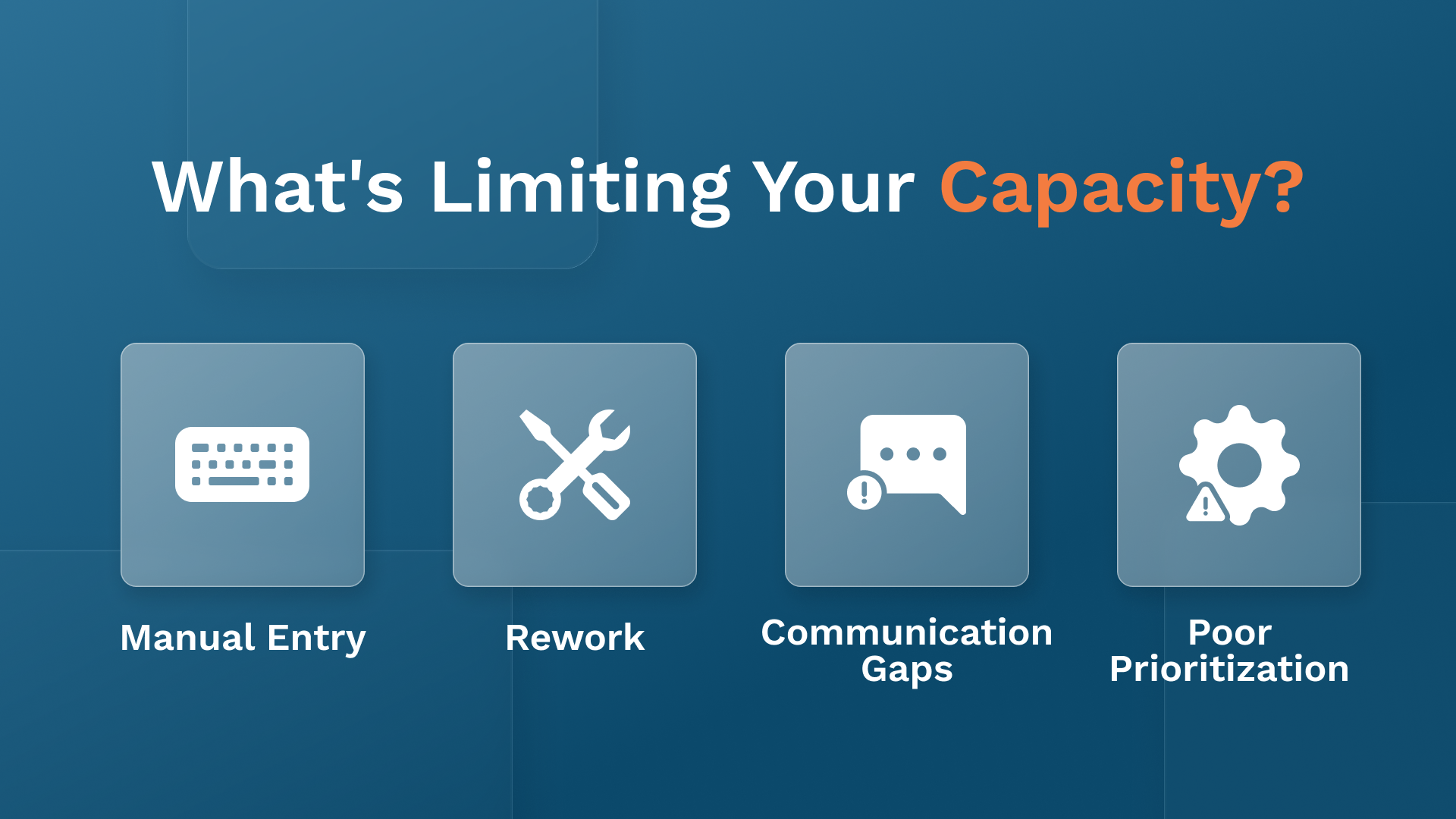
Manual data entry is one of the biggest constraints on growth in LTC pharmacy operations. Every time staff re-type an order, manually update census information, or reconcile MAR discrepancies by hand, time is lost and error risk increases.
FrameworkLTC eliminates manual data entry by structuring workflows around real needs. FrameworkLTC minimizes duplicate entry by:
- Structuring workflows around facilities rather than patients
- Maintaining resident profiles tied directly to live census data
- Integrating with eMAR and EHR systems
- Centralizing order intake and status updates
The result is a cleaner, more reliable data flow. Teams move faster not because they rush, but because they don’t have to fix preventable issues later in the day
Create Shared Visibility Across the Entire Pharmacy
Scaling without hiring only works when everyone knows what’s happening in real time. In many pharmacies, visibility is fragmented. Order entry can’t see what’s piling up in fulfillment. Delivery teams don’t know which orders are delayed. Leadership doesn’t know where the day started to slip.
FrameworkLTC solves this by organizing work around facility-centric queues and real-time order status. Each team sees the same source of truth: what’s pending, what’s urgent, what’s delayed, and what’s complete. Because the system is built specifically for LTC, visibility aligns with how work actually happens: by facility, delivery window, and care urgency.
This shared awareness allows teams to rebalance work during the day instead of reacting after problems escalate.
Reduce Friction Between Pharmacy and LTC Facilities
Many delays don’t originate inside the pharmacy. They occur in the handoff between the pharmacy and the facility. Missing information, late updates, unclear STAT requests, and repeated phone calls all slow order processing and create frustration on both sides.
FrameworkLTC minimizes this friction by integrating pharmacy workflows with the systems facilities already use. FrameworkLTC has many partners and integrations. When census updates, medication changes, and order information flow directly into the pharmacy system, fewer clarifications are needed. Facilities gain clearer visibility into order status, and pharmacy staff spend less time chasing answers.
As communication becomes more structured and predictable, speed improves without increasing workload.
Scale Facility Relationships Without Increasing Operational Load
Growth often feels risky because each new facility introduces variation, like different schedules, preferences, delivery needs, and billing requirements. Without standardization, adding facilities quickly overwhelms staff.
FrameworkLTC allows pharmacies to embed facility-specific rules directly into the system. Once those rules are set, workflows run consistently regardless of how many facilities are added. Onboarding becomes repeatable. Cycle fills, delivery schedules, and billing processes follow defined patterns instead of relying on tribal knowledge.
This is how pharmacies expand facility partnerships without expanding teams. Consistency replaces customization at the individual level.
Improve Turnaround Times through Smarter Prioritization
There are so many benefits to using pharmacy automation—especially with the right solution and
Turnaround time is one of the most visible indicators of pharmacy performance, yet improving it through staffing alone is inefficient. The real leverage comes from prioritization.
FrameworkLTC structures work so urgent and time-sensitive orders are identified early, not discovered late. Facility delivery windows, acuity, and cycle-fill schedules guide how work is sequenced throughout the day. Because rework is reduced and visibility is shared, teams focus on the right tasks at the right time instead of constantly switching context.
Turnaround times improve naturally—not because people work faster, but because the system supports better decisions.
Scaling is a System Design Challenge
LTC pharmacies don’t scale by adding more people. They scale by designing workflows that match the realities of long-term care.
When repetitive tasks are automated, data flows cleanly, visibility is shared, and facility communication is streamlined, existing teams can handle significantly more volume with less stress and fewer errors.
FrameworkLTC was built for this environment—high volume, high complexity, multi-facility coordination, and zero tolerance for error. For pharmacies looking to grow without growing headcount, the path forward isn’t bigger teams. It's a better system.
Want to learn more about the benefits that come with a customized, fully integrated pharmacy automation solution? Schedule a demo of FrameworkLTC to see the benefits firsthand and start embracing automation in your pharmacy.
FAQs