Long-term care (LTC) pharmacies are under pressure from shrinking margins, rising prescription volume, and ongoing staffing shortages. These are no longer temporary, isolated issues. They’re facing a systemic shift that requires a new operational model.
FrameworkLTC helps pharmacies stabilize operations and scale efficiently by reducing manual work, improving billing accuracy, and supporting high-volume workflows with purpose-built LTC technology.
Current State of LTC Pharmacy Operations
LTC pharmacies are navigating a convergence of financial, operational, and workforce challenges. Margins are tightening, prescription demand is accelerating, and staffing shortages are becoming a permanent constraint. Medicare margins were expected to shrink from 13.3% in 2021 to less than 8% in 2025. At the same time, LTC facility usage is rising, driven by a record 4.18 million Americans turning 65 in 2025 while we face a historic workforce shortage in health care workers.
These pressures aren’t isolated. They compound each other. As volume increases, inefficiencies become more expensive. As staffing tightens, small workflow issues turn into operational bottlenecks.
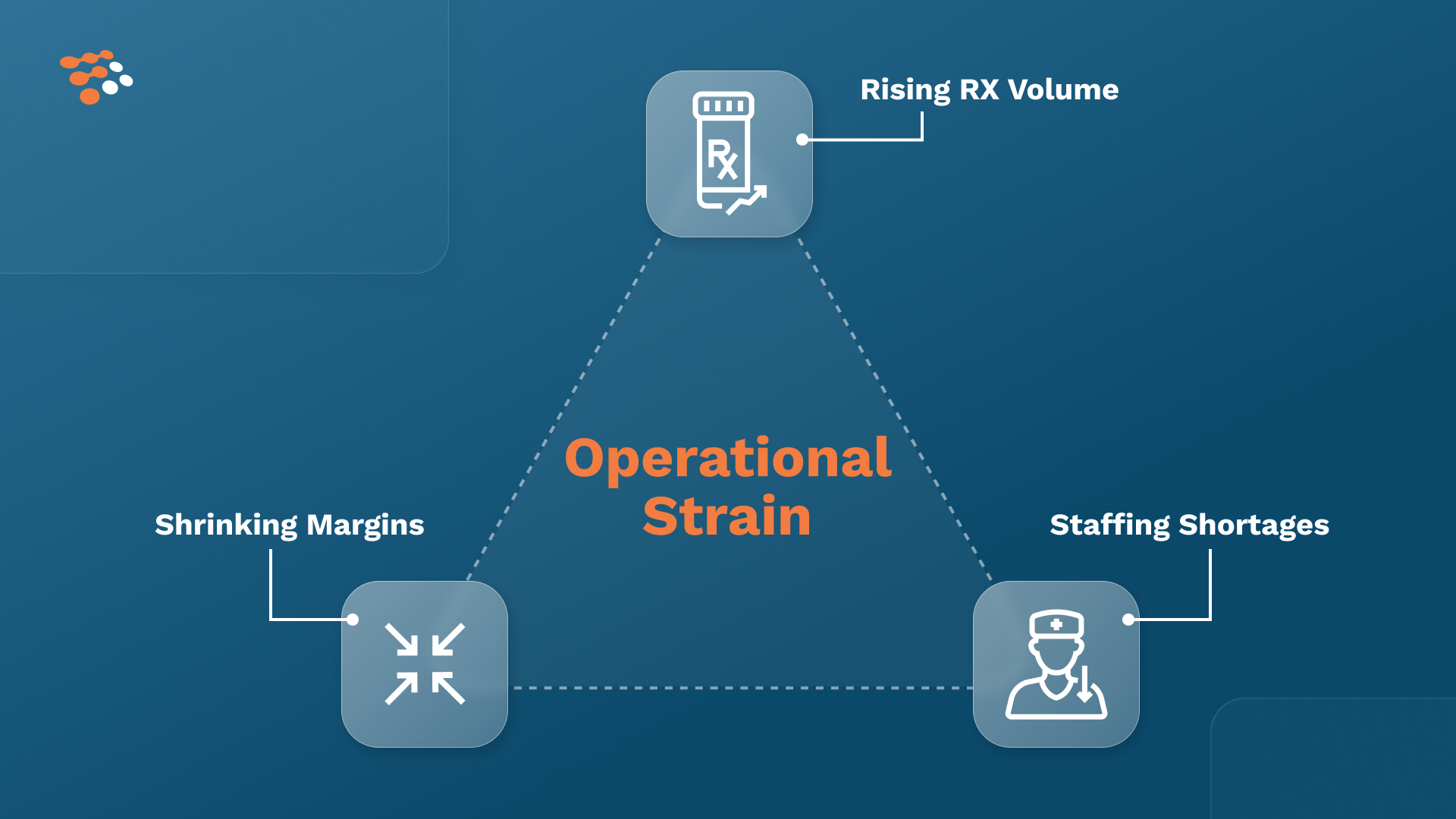
The core issue is this: most systems in use today were not built for the complexity of LTC pharmacy operations and the challenges they are facing.
Shrinking Pharmacy Margins Force LTC Operational Efficiency
Reimbursement pressure has been building for years, and recent policy changes like the 2025 reconciliation law have intensified it. The Inflation Reduction Act has added another layer of financial complexity, reshaping reimbursement dynamics and tightening margins even further for LTC pharmacies. At the same time, labor remains one of the largest cost centers, often accounting for 40–60% of operating expenses.
That means inefficiency is no longer just an inconvenience. It directly impacts profitability.
Manual processes, claim errors, and redundant workflows quietly erode margins every day. Pharmacies that maintain status quo operations will feel this pressure most.
FrameworkLTC addresses this by reducing operational waste at the system level, such as automating repetitive tasks, improving billing accuracy, and creating more consistent workflows across the dispensing lifecycle.
Rising LTC Prescription Volume Outpaces Capacity
The demand for LTC pharmacy services is increasing rapidly, driven by an aging population and more complex medication regimens. Long term care residents often take a high number of medications, averaging 13 per month.
More prescriptions should mean growth. But without the right infrastructure, it creates strain instead. The future of growth in LTC pharmacy depends on long term care pharmacy software and systems that expand capacity without expanding labor at the same rate.
FrameworkLTC supports this shift by embedding automation directly into workflows, reducing manual intervention and enabling pharmacies to process higher volumes with greater consistency.
LTC Staffing Shortages are Structural
Staffing shortages are no longer temporary. They’re a structural constraint that increases operational risk and reduces capacity.
High turnover, extended onboarding, and increasing workload expectations have created an environment where teams are constantly operating near capacity. The healthcare industry continues to have turnover rates reaching 22%.
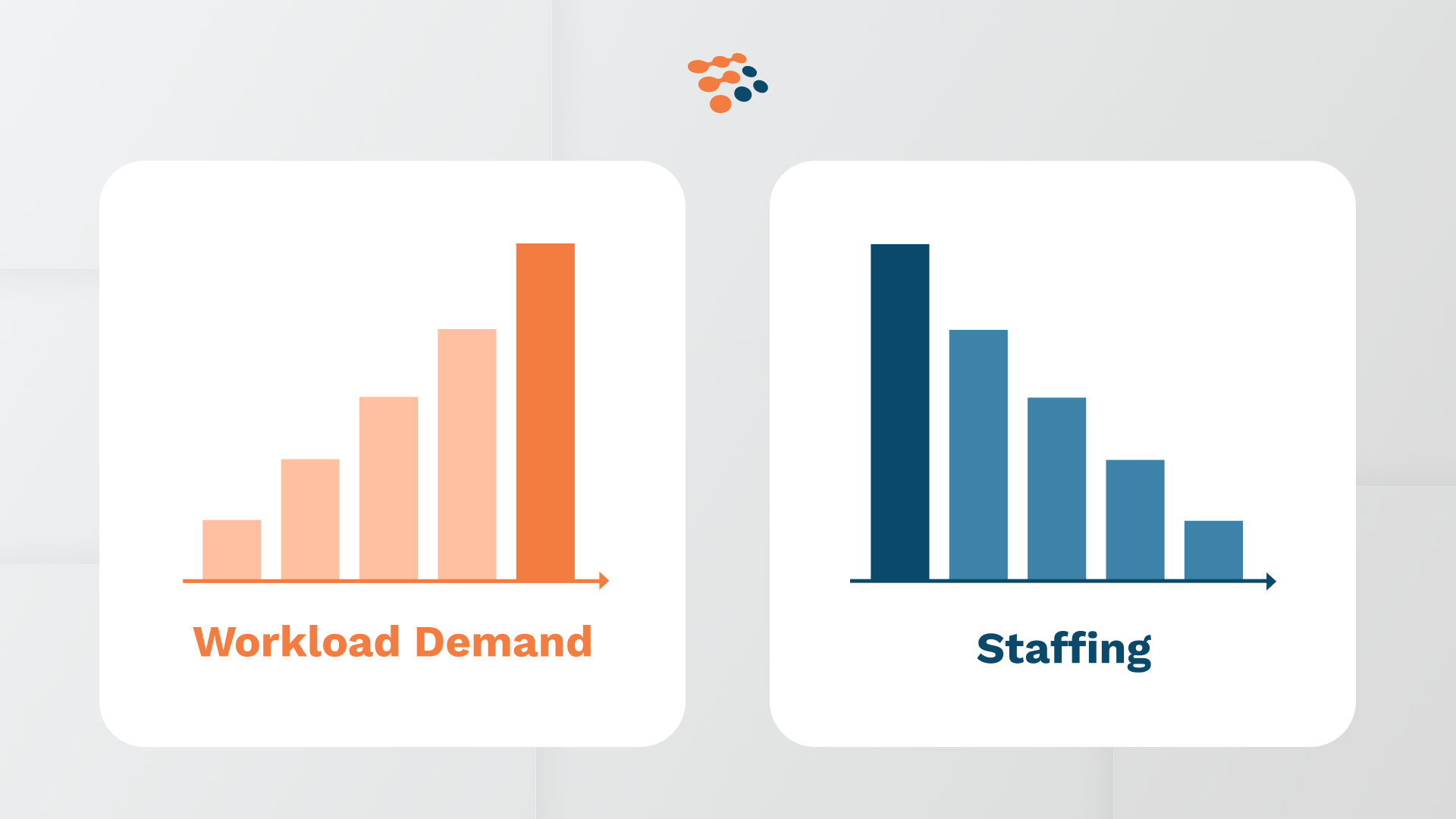
The real issue isn’t just pharmacy staffing levels. It’s how much work each team member is required to carry due to inefficient systems.
FrameworkLTC reduces this burden by simplifying workflows, eliminating duplicate work, and enabling faster ramp-up for new hires through intuitive, LTC-specific processes.
This aligns directly with what many pharmacies are experiencing: repetitive tasks and order entry complexity consuming a disproportionate amount of time and effort.
Interconnected Challenges in LTC
Margins, volume, and staffing are not separate problems. They reinforce each other:
- Higher volume exposes inefficiencies
- Inefficiencies increase labor demand
- Labor constraints increase costs
- Rising costs compress margins
Without intervention at the system level, this cycle accelerates.
The pharmacies that break this cycle are the ones that shift from reactive operations to structured, technology-driven workflows.
LTC-Built Technology
FrameworkLTC is not a retail-adapted system. It is purpose-built for LTC pharmacy complexity, including multi-facility workflows, complex billing structures, and high-volume dispensing environments.
Instead of adding layers of tools or manual processes, it consolidates operations into a unified platform designed to:
- Reduce manual work across the dispensing lifecycle
- Improve billing and claims accuracy
- Support high-volume prescription processing
- Eliminate disconnected systems and duplicate entry
- Create consistent, scalable workflows
This isn’t just about efficiency. It’s about creating operational stability in an environment where variability is increasing.
The Shift LTC Pharmacies Need to Make
The industry is moving from effort‑based operations to system‑based performance. Success will no longer depend on how hard teams work, but on how well workflows are designed.
In an effort‑based operation, teams compensate for system gaps with extra clicks, manual checks, and constant firefighting. A system‑based operation removes that burden entirely by embedding accuracy and efficiency directly into workflows like order entry, billing, and cycle‑fill.
Pharmacies that rely on training, policy, or staffing alone to solve these challenges will continue to face bottlenecks. Those that embed efficiency directly into their systems will be positioned to scale.
LTC pharmacies that adopt purpose‑built systems like FrameworkLTC are better positioned to stabilize operations, protect margins, and scale sustainably, no matter how the industry evolves.
FAQs